Day Bidet #67

And they shall beat their swords into plowshares, and their spears into pruninghooks:

  1. “Love is discipline.”
  2. The 2021 death rate in Indiana was 40% higher than the pre-pandemic death rate—and most of the deaths weren’t COVID deaths. (Related—admittedly small sample size. Related—a good read. Related—ruh roh.)
  3. “Only God can walk on the seas.”
  4. Extremely interesting Huberman Lab episode on slowing and reversing aging.
  5. “We have a happy God.”
  6. Heroic. Gorgeous. Self-parodic. (Related.) Accurate. Mildly cyberpunk. Wildly cyberpunk. (Related.)
  7. Willard: “We can be vulnerable because we are, in the end, simply invulnerable.”

More:

Say it ain’t so, AOC! (Language warning. Related. Related—my condolences to fans of modern art. Related. Dallas Willard said, “[P]op culture today … is an economic enterprise and only by accident occasionally has something to do with art.” He should have added: “and a political enterprise.”)

“[T]he second lament may indeed reflect Jeremiah’s struggle with Hananiah.”

The human race is slowly committing suicide. (Related. Related: Why is a Supreme Court Justice referring to a human being as an “it”?)


“When I went to China, one of the top officials asked me, ‘What is a communist to you?’ I said, ‘A child of God.'”

Day Bidet #66

That which hath been is now, and that which is to be hath already been:

  1. “At the end of all our striving and longing we find, not a force, but a face.” (Related: “[I]t’s this concrete specificity, the sharp-edged exactness of the image, that makes me profoundly, unapologetically religious.” Related: “Our North American dominant cultural values are massively resistant to a theology of the cross, precisely because the cross places suffering at the heart of God’s character and at the heart of meaningful, faithful human life.”)
  2. You can’t trust the experts… (Related. Related. Related. Related. Related.)
  3. “They wouldn’t bend.” (Related.)
  4. “I wish the bay was clear like it used to be.” (Related: “[W]e will never again experience the true glory of the American chestnut.” As Dávila said, “The horror of progress can only be measured by someone who has known a landscape before and after progress transforms it.”)
  5. “[A]fter Jesus came into the world, his mother wrapped him in cloths. After Jesus died, Joseph of Arimathea wrapped his body in a linen cloth. After wrapping Jesus in cloths, Mary laid him in a manger, a place for animals. After wrapping Jesus in a linen cloth, Joseph of Arimathea laid his body in a tomb, a place for dead bodies.”
  6. “[T]he power of material goods as symbols of social position has diminished due to their accessibility. As a result, the aspirational class has altered its consumer habits away from overt materialism to more subtle expenditures that reveal status and knowledge.” (Translation: Millennials don’t care about being wealthy as much as they care about being cool.)
  7. “‘I gave my hat,’ he said with a huge smile.”

More:

Homeschool your kids (language warning).

An interesting hypothesis.

Carnivore success story. (Related. Related—language warning.)

“My own heart let me more have pity on.”

Ancient Rome in 3D. (Related.)

Pascal: “Two errors. 1. Taking everything literally. 2. Taking everything spiritually.”

There Is No Such Thing as a Waste of Time

Janus and Public-Sector Innovation - The Atlantic

We liked wasting time, but almost nothing was more annoying than having our wasted time wasted on something not worth wasting it on.

Joshua Ferris, Then We Came to the End

And whatsoever ye do in word or deed, do all in the name of the Lord Jesus, giving thanks to God and the Father by him.

Colossians 3.17

Many things feel like a waste of time. My, uh, housemates expect me to do certain chores which in my view are obvious wastes of time. (Which chores, you ask? Ha!) But I had a realization the other day: Nothing is a waste of time unless I allow it to become one.

Why? Because literally anything can be an opportunity to become more Christlike—more loving, joyful, peaceful, patient, kind, good, gentle, faithful, self-controlled—and becoming more Christlike is never a waste of time. Even (and perhaps especially!) life’s annoyances are opportunities to grow, because it is precisely life’s annoyances that teach us patience and every other virtue. Anything that comes our way can refine and strengthen us. So no life experience has to be useless.

For better or for worse, it’s not physically possible to work towards any earthly goal literally all the time. We can’t work out or study for the MCAT or [insert earthly goal here] 24/7. But we can become more like Jesus 24/7 (though of course it’s hardly natural or easy to do so). And the more we look at annoyances, inconveniences, obstacles, trials, and tribulations as opportunities to become more like Jesus, the happier, healthier, and holier we’ll be.

No doubt, the change in mindset from “This is a waste of time” to “This is an opportunity for me to grow and become more like Jesus” is not one I’ve mastered. (The art of living is hard to master!) But it is one I’ve been keeping in mind the past few days, and it’s already started to pay tiny dividends in who I am.

And what could be more valuable than that? If I have love, joy, peace, and all the other virtues—all the other qualities of Jesus—what more could I want or need?

Happy New Year, readers! I’m thankful for all of you. My 2022 thought: There is no such thing as a waste of time.

Day Bidet #65

trinity

Es ist ein Ros entsprungen:

  1. I can’t keep up with Jason Engwer. But maybe you can!
  2. Demon World. Demon World. (Related—language warning.) And yet fear not! “For this purpose the Son of God was manifested, that he might destroy the works of the devil.”
  3. “The torture allotted to the Danaids in the classical underworld, that of attempting to fill sieves with water, is the symbol not of one vice, but of all vices.”
  4. Every family should have seven sons—at least. (Just imagine the snowball fights!)
  5. “If this life is not a real fight, in which something is eternally gained for the universe by success, it is no better than a game of private theatricals from which one may withdraw at will. But it feels like a real fight.”
  6. Language warning: “The whole selection process for elite schools is to skim a band of truly gifted students from the top, then admit a bunch of kids with identical resumes whose parents will collectively buy the crew team a new boathouse, and then you find a kid whose parents moved to the states from Nigeria two years before he was born and whose family owns a mining company and you call that affirmative action.” (Related: “[F]ederal student aid increases university tuition rates, perhaps by as much as 60 cents on the dollar.” Whoops!)
  7. “[T]he crowd is forbidden to be sorrowful.” (Related.)

More:

Clear and informative, and worth a listen. (Related: “German medical bureaucrats … were soon consulting experts on how best to instil ‘fear and a willingness to obey in the population.'” Related—except how many lives have we really “saved”?)

“[H]eretics didn’t seem very successful in winning over most congregations in the second century.”

Baudrillard, maybe: “Washington, DC is a perfect model of the entangled orders of simulation. To begin with it is a play of illusions and phantasms.” (Related.)

Charles Aycock: “Illiterate we have been, but ignorant never. Books we have not known, but men we have learned, and God we have sought to find out.” (Related: “[I]t certainly does take a whole lot of joy, sorrow, happiness, misery, laughter and tears all mixed up together to make out a life.”)

Day Bidet #64

Good times there are not forgotten

O come, O come Emmanuel:

  1. “You won’t find God on your own.” (Related. Related. Related.)
  2. Heroic—truly. (Related. Related. Related. Related. Also relatedplease homeschool your kids!) Unhinged. Also unhinged (buy bitcoin!). Unsurprising. Also unsurprising (Clown World!). Haunting. Heavenly! Wholesome. Very polite. (Related.)
  3. Craig Keener on miracles. (Related. Related!)
  4. “He ruined my career, but he didn’t ruin my life.”
  5. Food for thought. (More food for thought.)
  6. “We are still acting like boy scouts dragging reluctant old ladies across the streets they do not want to cross. We are trying to remake Vietnamese society, a task which certainly cannot be accomplished by force and which probably cannot be accomplished by any means available to outsiders.” Some things never change!
  7. Jesus was a Southerner.

More:

Ponder this thread and it’ll revolutionize how you think about the Internet…and the CIA…and maybe one or two other things. Then ponder this tweet and it’ll revolutionize how you think about modern history. Lastly, ponder this sentence: “The isolated imagination is easily corrupted by theory.”

Even in Clown World, genuine scholarship continues apace. (Related. Related.)

Yarvin: “In the 2020s, Science has killed more people than Hitler.” (Related: “When it comes to the COVID jab specifically, calculations by Steve Kirsch … suggest injuries are underreported by a factor of 41.” Related. Related. Related. Related. Related. Related—in their defense, who could have known ahead of time that viruses mutate? Related: “For many parents, the decision to volunteer their kids was easy.” Oof. Related—the experts have never been all that trustworthy. Nor the “fact-checkers.” As for the politicians…)

Thomas Merton: “Do not be too quick to condemn the man who no longer believes in God: for it is perhaps your own coldness and avarice and mediocrity and materialism and sensuality and selfishness that have killed his faith.” (Related: “My own heart let me more have pity on.”)

No Profit Under the Sun

Mansion ruins by SkyCam on DeviantArt

I said in mine heart, Go to now, I will prove thee with mirth, therefore enjoy pleasure: and, behold, this also is vanity. I said of laughter, It is mad: and of mirth, What doeth it? I sought in mine heart to give myself unto wine, yet acquainting mine heart with wisdom; and to lay hold on folly, till I might see what was that good for the sons of men, which they should do under the heaven all the days of their life. I made me great works; I builded me houses; I planted me vineyards: I made me gardens and orchards, and I planted trees in them of all kind of fruits: I made me pools of water, to water therewith the wood that bringeth forth trees: I got me servants and maidens, and had servants born in my house; also I had great possessions of great and small cattle above all that were in Jerusalem before me: I gathered me also silver and gold, and the peculiar treasure of kings and of the provinces: I gat me men singers and women singers, and the delights of the sons of men, as musical instruments, and that of all sorts. So I was great, and increased more than all that were before me in Jerusalem: also my wisdom remained with me. And whatsoever mine eyes desired I kept not from them, I withheld not my heart from any joy; for my heart rejoiced in all my labour: and this was my portion of all my labour. Then I looked on all the works that my hands had wrought, and on the labour that I had laboured to do: and, behold, all was vanity and vexation of spirit, and there was no profit under the sun.

Ecclesiastes 2.1-11

There Are No Peasants Now

“The faith of the majority of educated people of our day,” Tolstoy observes, “was expressed by the word ‘progress.’ It then appeared to me that this word meant something. I did not as yet understand that, being tormented (like every vital man) by the question how it is best for me to live, in my answer, ‘Live in conformity with progress,’ I was like a man in a boat who when carried along by wind and waves should reply to what for him is the chief and only question, ‘Whither to steer,’ by saying, ‘We are being carried somewhere.'”
There has been no advance beyond this position since Tolstoy’s day.

Dallas Willard, The Divine Conspiracy: Rediscovering Our Hidden Life In God

Quite the opposite:

Tolstoy began to recover himself at the point where he realized that “I and a few hundred similar people are not the whole of mankind, and that I did not yet know the life of mankind.” He could observe the mass of persons, the peasants, who in the most miserable of conditions found life deeply meaningful and even sweet. They had not heard about “particles and progress.” But this is no longer possible. The peasants now watch TV and constantly consume media. There are no peasants now.

There are, however, godly men and women now—as there have always been and always will be. They are easily found by those who wish to find them.

(Related.)

Day Bidet #63

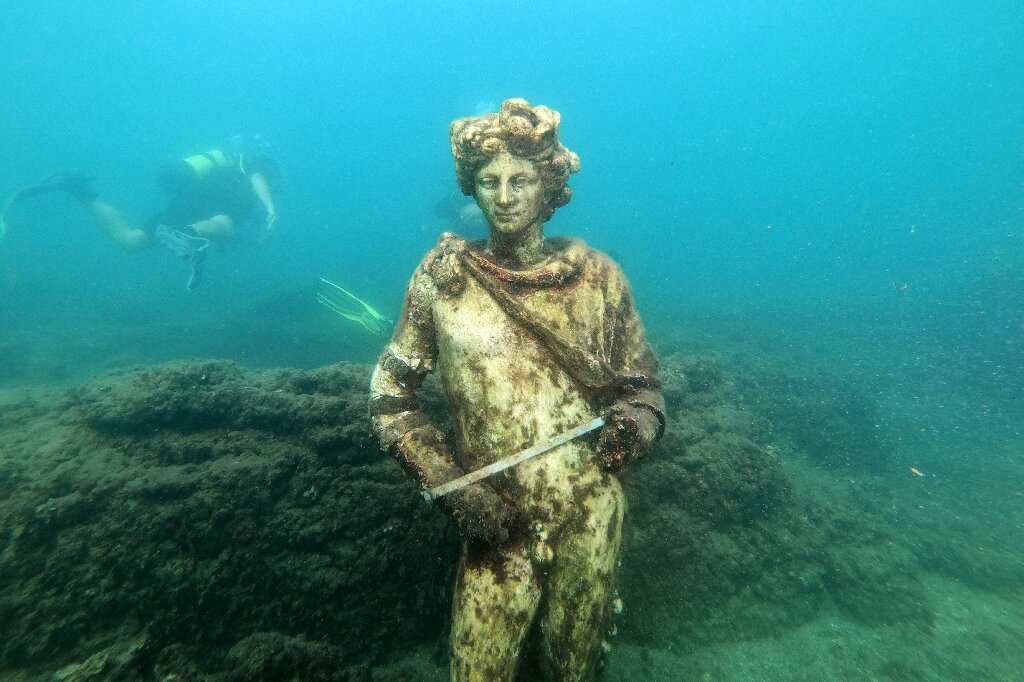
Divers can explore the underwater ruins of the ancient Roman party town of Baiae

You never planned on the bombs in the sand or sleeping in your dress blues:

  1. “And when I read that, I wept.” (Related.)
  2. “The country of knights and ladies. The country of Victor Hugo and Chateaubriand. The country of Pascal and Descartes. The country of the fables of La Fontaine, the characters of Molière, and the verses of Racine.” (Related. Related.)
  3. “Reversed thunder, Christ-side-piercing spear.”
  4. Heroic. Also heroic. Demonic. Poetic. Also poetic. Glorious.
  5. “[T]he book of Joshua records that only three cities were destroyed by fire: Jericho (Josh. 6:24), Ai (Josh 8:28), Hazor (Josh. 11:11). Interestingly, there are 15th century BC destruction layers at all three sites.”
  6. Thread. (Related.)
  7. Newman: “Fear not that thy life shall come to an end, but rather fear that it shall never have a beginning.” Nouwen: “[C]onversion is the individual equivalent of revolution.” Chesterton: “To live it is necessary to be born again, to be born again it is necessary to die.”

More:

Clown World. Clown World. Clown World. Clown World. Clown World. Clown World. Clown World. (Which, by the way, is at least as old as Yankeedom.) What a time to be alive, truly.

This…is a stretch.

“The left is comprised of upper middle class professionals. ‘Leftism’ is the social relations & practices that advance their class interests.”

“Jesus is appointed high priest at his entry into heaven, after his resurrection.”

Unprecedented

[I]n his Politics, Aristotle says that “dissimilarity of stock is conducive to factional conflict,” i.e., ethnic differences in and of themselves, irrespective of disagreements over regime form (typically few versus many), can drive revolution. Aristotle seems to admit the possibility of assimilation: dissimilarity, he says, leads to conflict “until a cooperative spirit develops.” But he cites no examples, forcing one to wonder how likely it is for this theoretical possibility to be actualized in the real world. … Multi-ethnic polities are hardly unknown to history. Of these, Aristotle gives several examples—all of which ended up fighting civil wars along ethnic lines. … [W]hen the Census announced that, for the first time in American history, the white population had declined in absolute numbers, The Tonight Show’s audience cheered. No native-born population of any country has ever literally cheered its own dispossession.

Michael Anton, “Unprecedented”

Read the whole thing.

Jolly Beggars

#lord of the rings from Lord of the Rings Scenery

All those expressions of unworthiness which Christian practice puts into the believer’s mouth seem to the outer world like the degraded and insincere grovellings of a sycophant before a tyrant…. In reality, however, they express the continually renewed, because continually necessary, attempt to negate that misconception of ourselves and of our relation to God which nature, even while we pray, is always recommending to us. No sooner do we believe that God loves us than there is an impulse to believe that He does so, not because He is Love, but because we are intrinsically lovable. … [D]epth beneath depth and subtlety within subtlety, there remains some lingering idea of our own, our very own, attractiveness. It is easy to acknowledge, but almost impossible to realise for long, that we are mirrors whose brightness, if we are bright, is wholly derived from the sun that shines upon us. Surely we must have a little—however little—native luminosity? Surely we can’t be quite creatures?

For this tangled absurdity of a Need … which never fully acknowledges its own neediness, Grace substitutes a full, child-like and delighted acceptance of our Need, a joy in total dependence. We become “jolly beggars”. The good man is sorry for the sins which have increased his Need. He is not entirely sorry for the fresh Need they have produced. … For all the time this illusion to which nature clings as her last treasure, this pretence that we have anything of our own or could for one hour retain by our own strength any goodness that God may pour into us, has kept us from being happy. We have been like bathers who want to keep their feet—or one foot—or one toe—on the bottom, when to lose that foothold would be to surrender themselves to a glorious tumble in the surf. The consequences of parting with our last claim to intrinsic freedom, power, or worth, are real freedom, power and worth, really ours just because God gives them and because we know them to be (in another sense) not “ours”. Anodos has got rid of his shadow.

CS Lewis, The Four Loves