The Shallowness of It All

How to Interpret 'Bad' Tarot Cards | Keen

In the modern spiritual marketplace, you pick your enchantment, like shopping for deals at Walmart…. Our enchantments have become lifestyle choices. We pick the enchantment that suits us or is most in fashion. … If we’re thoughtful, we can sense the shallowness of it all. Can an enchantment we pick up and lay down at a whim really give our lives the sacred meaning and weight we’ve been longing for? Can an enchantment we choose for ourselves become anything but narcissistic, a reflection of our own highly selective and cropped self-image? Immanent enchantments are on the rise because they are perfectly suited to our consumeristic age. And that is the fatal, fundamental flaw.

Richard Beck, “Pascal’s Pensées: Week 2, Transcendence Matters”

Good Ears

Fennec fox | Smithsonian's National Zoo

Christianity isn’t a religion because it isn’t a path toward God, a spiritual regimen to follow. Oh, to be sure, people turn Christianity into a religion all the time, twisting it into a moral self-improvement project. But whenever Christianity is turned into a pathway, gives you a plan to get closer to God, it is no longer a proclamation of the gospel. … Christianity is history. An event. A report. News. Glad tidings.

Richard Beck, “The Non-Religion”

Of course, two thousand years later, you might think that the good news isn’t exactly new. And when life gets hard, as it often does, you might also feel as though the good news isn’t even good, either.

And yet—and yet—if we let it, for him who hath ears to hear, it is a continual surprise, “a knock at the door,” a new-every-morning universequake.

The trick is having good ears.

Day Bidet #43

A double portion:

  1. “One would have thought that I, as a Catholic priest, would have spoken out against the atomic bombing of nuns. … One would have thought that I would have suggested that as a minimal standard of Catholic morality, Catholics shouldn’t bomb Catholic children. I didn’t.”
  2. Flashback.
  3. “Humans, to remain human, cannot become inured to killing. The death of each animal has to be marked and given sacred recognition.”
  4. Carnivore success story. Carnivore success story. Carnivore success story. Carnivore success story. Carnivore success story. Carnivore success story.
  5. “Those who complain about ‘drama’ in worship have limited historical understandings of what ‘worship’ was like in Israel, and for centuries among Christians.”
  6. You can’t trust the experts. (Related: “The Road to Sociology is the ‘corruption of the epistemic process in an entire discipline’ when everything becomes subservient to progressive political ideology.” Related.)
  7. “Jesus wasn’t born ready to be our high priest, but by the grace of God he died ready.”
  8. “What kind of kingship is this?” Related: “Who, I say, could have hoped that the nations would hope in the name of Christ, when He was arrested, bound, scourged, mocked, crucified, when even the disciples themselves had lost the hope which they had begun to have in Him?”
  9. Not national news. Not national news. Not national news. Not national news.
  10. “I love Christ more than this.”
  11. “[W]e’re told society pedestalizes whites while causing people of color to feel bad about themselves. The data say otherwise.” (Related. Related.)
  12. “He had set the example by sexually exploiting one subject and killing another. Sexual exploitation and murder were soon to devastate his own household.”
  13. Clown World: “How better to honor the legacy of a gang of murderous felons by discriminating against whites?” (Related. Related.) Clown World. Clown World. Demon World. Demon World.
  14. Q&A on the Resurrection.

More:

It’s still early. (Related.)

“[W]e can place Paul confidently in Corinth in 52 CE.”

Drowned in a Sea of Irrelevance

Pin on Red Root ideas

What Orwell feared were those who would ban books. What Huxley feared was that there would be no reason to ban a book, for there would be no one who wanted to read one. Orwell feared those who would deprive us of information. Huxley feared those who would give us so much that we would be reduced to passivity and egoism. Orwell feared that the truth would be concealed from us. Huxley feared that the truth would be drowned in a sea of irrelevance.

Neil Postman

No doubt, our world increasingly resembles Orwell’s dystopian vision rather than Huxley’s. (For instance, here‘s Twitter Minitrue Global Public Policy team doublethinkingly saying they strongly condemn Internet shutdowns and have also recently suspended a number of accounts in the same tweet.)

But the advantage still probably goes to Huxley. Even in the Current Year, the truth still remains fairly unconcealed—because it does not need to be concealed, because hardly anyone wants to discover (read: unconceal) it, because doing so means wading through a sea of irrelevance to something not just unfashionable but blasphemous.

Much easier, then, simply to drown in our regularly scheduled programming. Certainly it is quite enjoyable—but then again, so was soma.

Day Bidet #42

“Jesus Christ the same yesterday, and to day, and for ever”:

  1. “I am more and more of the opinion that when the apostles argued ‘that it was necessary for the Messiah to suffer,’ they were thinking especially of David in the books of Samuel (and as refracted in the Psalms).”
  2. “If someone can’t argue for low-status beliefs without fear, then it’s better to just admit that there is no fair discourse.” (Related: “Not National News.” Related. Related. Related. Related.)
  3. NT Wright on the Pharisees.
  4. Nature trumps nurture.
  5. He that hath ears to hear, let him hear.
  6. A handy resource. (Related.)
  7. “Idolatry Is Always Polytheism”

More:

Pray for the world.

An interesting suggestion.

HODL bitcoin. (And remember: You can’t trust the experts.)

“Christians who believed in bodily resurrection seem to have regarded their own mortal coils as the crucial venues in which they were to live out their devotion to Christ.”

Which Is It, Then?

Becoming Mrs. Lewis' explores the turbulent life of the woman C. S. Lewis  called 'my whole world' - The San Diego Union-Tribune

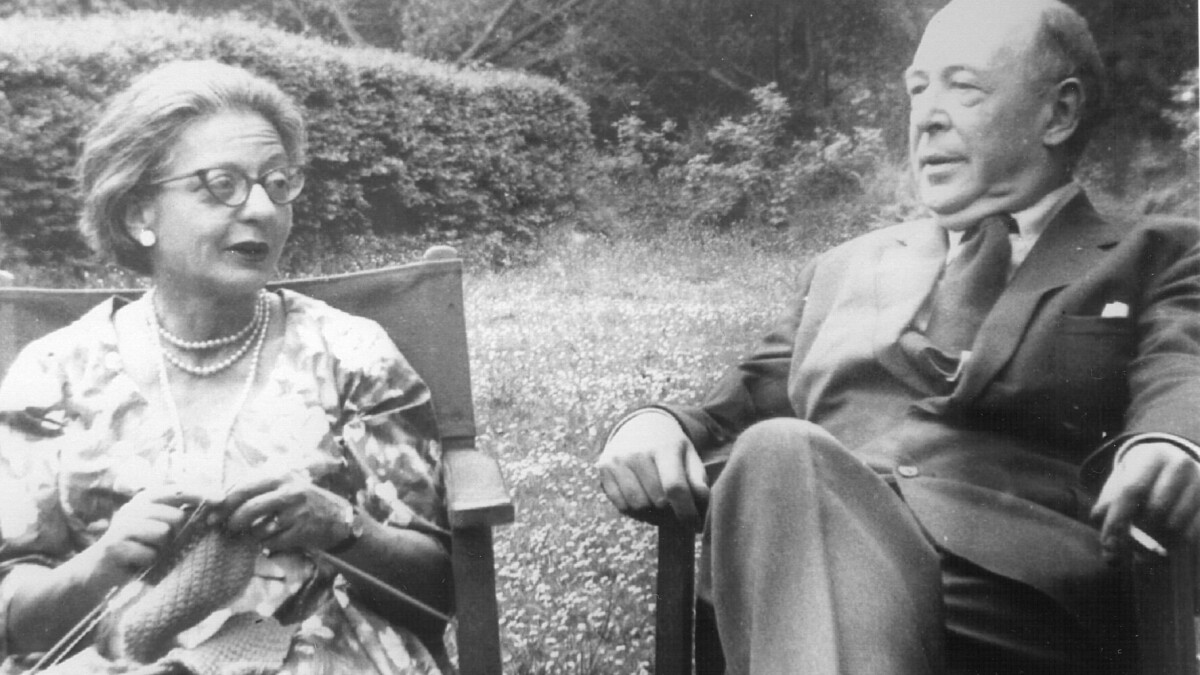
If God’s goodness is inconsistent with hurting us, then either God is not good or there is no God: for in the only life we know He hurts us beyond our worst fears and beyond all we can imagine. … But is it credible that such extremities of torture should be necessary for us? Well, take your choice. The tortures occur. If they are unnecessary, then there is no God or a bad one. If there is a good God, then these tortures are necessary. For no even moderately good Being could possibly inflict or permit them if they weren’t.
Either way, we’re for it.
What do people mean when they say ‘I am not afraid of God because I know He is good?’ Have they never even been to a dentist?

CS Lewis, A Grief Observed

Which is it, then?

“No God” must be ruled out. Our contingent, finite, spatiotemporally bound universe exists. Ex nihilo nihil fit: Our universe must therefore have a cause which is necessary, infinite, and unbound by space or time. Things are slightly more complicated than that—but not by much.

Which is it, then? A good God, or a bad one?

What reason have we, except our own desperate wishes, to believe that God is, by any standard we can conceive, ‘good’? Doesn’t all the prima facie evidence suggest exactly the opposite? What have we to set against it?

We set Christ against it. But how if He were mistaken? … The trap, so long and carefully prepared and so subtly baited, was at last sprung, on the cross. The vile practical joke had succeeded. … Is it rational to believe in a bad God? Anyway, in a God so bad as all that? The Cosmic Sadist, the spiteful imbecile?

I think it is, if nothing else, too anthropomorphic. When you come to think of it, it is far more anthropomorphic than picturing Him as a grave old king with a long beard. That image is a Jungian archetype. … It preserves mystery. Therefore room for hope. Therefore room for a dread or awe that needn’t be mere fear of mischief from a spiteful potentate. But the picture I was building up last night is simply the picture of a man like S.C.—who used to sit next to me at dinner and tell me what he’d been doing to the cats that afternoon. Now a being like S.C., however magnified, couldn’t invent or create or govern anything. He would set traps and try to bait them. But he’d never have thought of baits like love, or laughter, or daffodils, or a frosty sunset. He make a universe? He couldn’t make a joke, or a bow, or an apology, or a friend.

A bad God (or a bad man) could perhaps ape goodness and beauty to some degree. He could not create them out of nothing without examples of each to imitate (and eventually pervert). Have your pick of all the archvillains of history and fiction: Could any of them have composed not just your favorite poems but poetry itself? Could any of them have fashioned not just your favorite flowers but color and light and life themselves? Could Sauron, Hitler, Stalin, the Joker, or the Wicked Witch of the West not just have faked love but invented it?

But then every daffodil and peal of laughter and act of love is a singular proof of the existence of a good God.

Why, then, the tortures?

One answer is that faith only becomes serious when it becomes a latter of life and death—that only torture can awaken us from our madness:

Bridge-players tell me that there must be some money on the game ‘or else people won’t take it seriously’. Apparently it’s like that. Your bid—for God or no God, for a good God or the Cosmic Sadist, for eternal life or nonentity—will not be serious if nothing much is staked on it. And you will never discover how serious it was until the stakes are raised horribly high; until you find that you are playing not for counters or for sixpences but for every penny you have in the world. Nothing less will shake a man … out of his merely verbal thinking and his merely notional beliefs. He has to be knocked silly before he comes to his senses. Only torture will bring out the truth. Only under torture does he discover it himself.
And I must surely admit … that, if my house was a house of cards, the sooner it was knocked down the better. And only suffering could do it. But then the Cosmic Sadist and Eternal Vivisector becomes an unnecessary hypothesis. … God has not been trying an experiment on my faith or love in order to find out their quality. He knew it already. It was I who didn’t. … He always knew that my temple was a house of cards. His only way of making me realize the fact was to knock it down.

But another answer, in some respects the only answer, is that we simply do not know: do not know why Joy Davidman rather than CS Lewis, why the apostle James rather than his brother John, why this tragedy rather than another—or no tragedies at all.

And all the while the tortures continue apace. What, then?

Two widely different convictions press more and more on my mind. One is that the Eternal Vet is even more inexorable and the possible operations even more painful than our severest imaginings can forbode. But the other, that ‘all shall be well, and all shall be well, and all manner of thing shall be well’.


A Madness Took Me

Fellowship Of The Ring ~ Extended Edition ~ Gandalf warns Frodo about  Boromir at Moria HD - YouTube

‘Come, come, my friend!’ said Boromir in a softer voice. ‘Why not get rid of it? Why not be free of your doubt and fear? You can lay the blame on me, if you will. You can say that I was too strong and took it by force. For I am too strong for you, halfling,’ he cried; and suddenly he sprang over the stone and leaped at Frodo. His fair and pleasant face was hideously changed; a raging fire was in his eyes.
Frodo dodged aside and again put the stone between them. There was only one thing he could do: trembling he pulled out the Ring upon its chain and quickly slipped it on his finger, even as Boromir sprang at him again. The Man gasped, stared for a moment amazed, and then ran wildly about, seeking here and there among the rocks and trees.
‘Miserable trickster!’ he shouted. ‘Let me get my hands on you! Now I see your mind. You will take the Ring to Sauron and sell us all. You have only waited your chance to leave us in the lurch. Curse you and all halflings to death and darkness!’ Then, catching his foot on a stone, he fell sprawling and lay upon his face. For a while he was as still as if his own curse had struck him down; then suddenly he wept.
He rose and passed his hand over his eyes, dashing away the tears. ‘What have I said?’ he cried. ‘What have I done? Frodo, Frodo!’ he called. ‘Come back! A madness took me, but it has passed. Come back!’

JRR Tolkien, The Lord of the Rings

Madness. A passing madness, for Boromir—but the madness of sin is not always passing.

In fact, the mass of men lead lives of permanent madness. If we are not mad with rage like Boromir, we are mad with lust, or pride, or fear, or jealousy—or simply “respectable selfishness.”

Sin is rebellion, but sin is not just rebellion. It is madness, delusion, self-deception. “Man is not a rational animal; he is a rationalizing animal”—and the first person a madman rationalizes his madness to is to himself.

The first step, they say, is admitting you have a problem. But how can a madman recognize that he is mad?

One way is to practice the spiritual disciplines: to love, give, pray, fast, confess, humble oneself—to think on things that are true and honest and just and pure and lovely and of good report—to turn aside (as Frodo says earlier) from “the way that seems easier.”

The other is to sleepwalk in your madness, until you are awoken—by a broken trust (like Frodo’s in Boromir), or a broken dream, or a broken body, or a loved one’s death—or your own.

Day Bidet #41

Christus resurrexit:

  1. Resurrexit vere! (Related. Related.)
  2. You can’t trust the experts. You can’t trust the experts. You can’t trust the experts. You can’t trust the experts. You can’t trust the experts. (Related.)
  3. “The question seems no longer to be ‘how do we attain right standing before God as individuals?’ but ‘what position should we take on the social issues of the day?'” (Related. Related. Related. Related.)
  4. Probably also on the subject of not being able to trust the experts: The experts say there’s no evidence that oil pulling with coconut oil whitens your teeth, but my naturally and cheaply whitened teeth say otherwise. (The best thing you can do for your teeth, however, is still to cut carbs.)
  5. “No king of Israel ruled longer than Jeroboam II, and no dynasty had as many monarchs sit on the throne as did that of Jeroboam’s forebear, Jehu.”
  6. “Other professors learn to keep their mouths shut, which is the point. Students and policymakers never hear that affirmative action causes mismatch and all sorts of downstream problems.” (Related.)
  7. “Jesus had a mission and agenda. He wasn’t aimlessly wandering around practicing random acts of kindness. Jesus was engaged in the restoration and renewal of Israel, gathering the lost and scattered sheep back under the care of God.”

More:

“At Forrest’s death over 30,000 people attended his funeral; over a third of them were black.”

“I propose … that Paul received his gospel of non-circumcision … at his conversion, but did not preach it until much later.”

The FBI assures me that right-wing terrorists are the greatest threat to our country.

“It hasn’t always been easy, but it’s always good.”

Hell Is in an Uproar

089: Do Babies Know the Existence of God (Plus the Harrowing of Hell and  Sedevacantists) - Taylor Marshall

Are there any who are devout lovers of God?
Let them enjoy this beautiful bright festival!
Are there any who are grateful servants?
Let them rejoice and enter into the joy of their Lord!
Are there any weary with fasting?
Let them now receive their wages!

If any have toiled from the first hour,
let them receive their due reward;
if any have come after the third hour,
let him with gratitude join in the Feast!
And he that arrived after the sixth hour,
let him not doubt; for he too shall sustain no loss.
And if any delayed until the ninth hour,
let him not hesitate; but let him come too.
And he who arrived only at the eleventh hour,
let him not be afraid by reason of his delay.
For the Lord is gracious and receives the last even as the first.
He gives rest to him that comes at the eleventh hour,
as well as to him that toiled from the first.
To this one He gives, and upon another He bestows.
He accepts the works as He greets the endeavor.
The deed He honors and the intention He commends.
Let us all enter into the joy of the Lord!

First and last alike receive your reward;
rich and poor, rejoice together!
Sober and slothful, celebrate the day!
You that have kept the fast, and you that have not,
rejoice today for the Table is richly laden!
Feast royally on it, the calf is a fatted one.
Let no one go away hungry. Partake, all, of the cup of faith.
Enjoy all the riches of His goodness!

Let no one grieve at his poverty,
for the universal kingdom has been revealed.
Let no one mourn that he has fallen again and again;
for forgiveness has risen from the grave.
Let no one fear death, for the Death of our Savior has set us free.
He has destroyed it by enduring it.
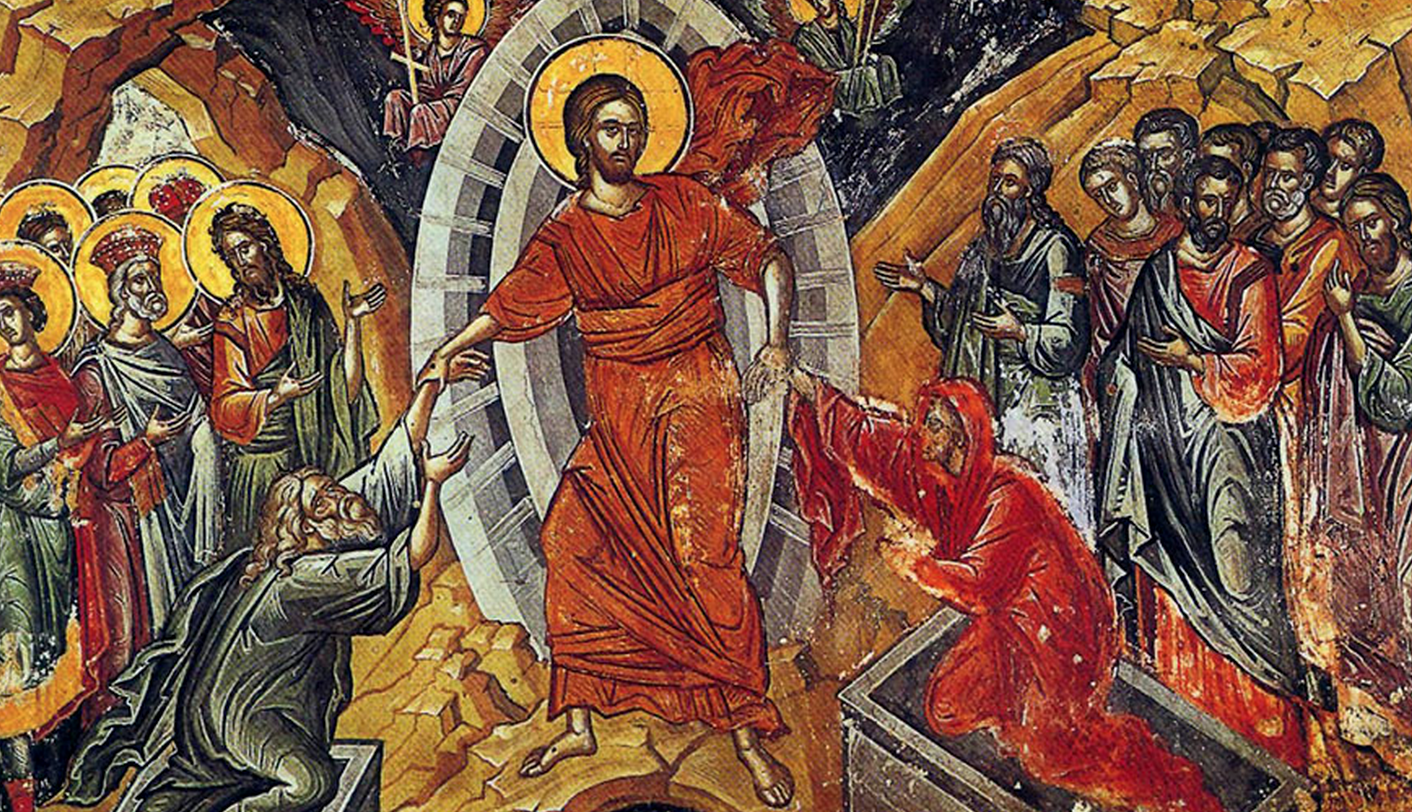
He destroyed Hell when He descended into it.
He put it into an uproar even as it tasted of His flesh.

Isaiah foretold this when he said,
“You, O Hell, have been troubled by encountering Him below.”
Hell was in an uproar because it was done away with.
It was in an uproar because it is mocked.
It was in an uproar, for it is destroyed.
It is in an uproar, for it is annihilated.
It is in an uproar, for it is now made captive.

Hell took a body, and discovered God.
It took earth, and encountered Heaven.
It took what it saw, and was overcome by what it did not see.
O death, where is thy sting?
O Hell, where is thy victory?

Christ is Risen, and you, o death, are annihilated!
Christ is Risen, and the evil ones are cast down!
Christ is Risen, and the angels rejoice!
Christ is Risen, and life is liberated!
Christ is Risen, and the tomb is emptied of its dead;
for Christ having risen from the dead,
is become the firstfruits of those who have fallen asleep.

To Him be Glory and Power forever and ever. Amen!

The Disagreeable Spectacle

Edvard Munch, “Golgotha”

Just as we were all, potentially, in Adam when he fell, so we were all, potentially, in Jerusalem on that first Good Friday before there was an Easter, a Pentecost, a Christian, or a Church. It seems to me worth while asking ourselves who we should have been and what we should have been doing. None of us, I’m certain, will imagine himself as one of the Disciples, cowering in agony of spiritual despair and physical terror. Very few of us are big wheels enough to see ourselves as Pilate, or good churchmen enough to see ourselves as a member of the Sanhedrin. In my most optimistic mood I see myself as a Hellenized Jew from Alexandria visiting an intellectual friend. We are walking along, engaged in philosophical argument. Our path takes us past the base of Golgotha. Looking up, we see an all-too-familiar sight—three crosses surrounded by a jeering crowd. Frowning with prim distaste, I say, “It’s disgusting the way the mob enjoy such things. Why can’t the authorities execute criminals humanely and in private by giving them hemlock to drink, as they did with Socrates?” Then, averting my eyes from the disagreeable spectacle, I resume our fascinating discussion about the nature of the True, the Good, and the Beautiful.

WH Auden, A Certain World: A Commonplace Book