Where There Is a Gift, There Is a Gift-giver

Mac Galaxy Wallpaper (76+ images)

Gratitude is a social emotion, the response we feel when we’ve been given a gift. And where there is a gift, there is a gift-giver. As I say in the book, you can’t feel grateful for life and creation and be an atheist, not emotionally. Being awed at the cosmic odds is different from saying “Thank you.”

Richard Beck, “Pascal’s Pensées: Week 17, At Home in the Universe?”

Back Behind and Underneath

The Tree of Life: a note |

[B]ack behind and underneath Job’s calculus of guilt and innocence; deeper than tit-for-tat human schemes that would supposedly sort out all the rational, moral reasons for why things happen in the world the way they do; beyond all this, at the heart of everything there is an unending, un-endable generosity, a light that can never be extinguished, an unfathomable source of life and goodness and wisdom. This isn’t merely some impersonal source of inspiration or fortitude that will get you safely through grief and out the other side; this ceaseless gift comes from the presence of the LORD Himself, the God who addresses Job, who speaks with Job, who seeks Job out precisely in his pain and loneliness. Beyond all deserving or undeserving, the LORD comes to Job. The LORD reveals Himself. Job is not given a platitude; he encounters a Person. The LORD is there—in majesty and mercy. And ultimately, in repentance and trust and hope, Job says to God, “I had heard You with my ear, but now my eye perceives You. Therefore, I recant and relent, being but dust and ashes” (42:5-6, NJPS). Job has not had his questions answered, but he has met the One who made him—the One who will open a future for him beyond all deserving or comprehending, the One who asks not for comprehension but for humility and trust.

Wesley Hill, “The Voice from the Whirlwind”

Read the whole thing.

Lewis on Glory

Nature never taught me that there exists a God of glory and of infinite majesty. I had to learn that in other ways. But nature gave the word glory a meaning for me. I still do not know where else I could have found one. I do not see how the “fear” of God could have ever meant to me anything but the lowest prudential efforts to be safe, if I had never seen certain ominous ravines and unapproachable crags. And if nature had never awakened certain longings in me, huge areas of what I can now mean by the “love” of God would never, so far as I can see, have existed. … And not, on the Christian premises, by accident. The created glory may be expected to give us hints of the uncreated; for the one is derived from the other and in some fashion reflects it.

CS Lewis, The Four Loves

Evil Is an Invasion

G. K. Chesterton - Wikipedia

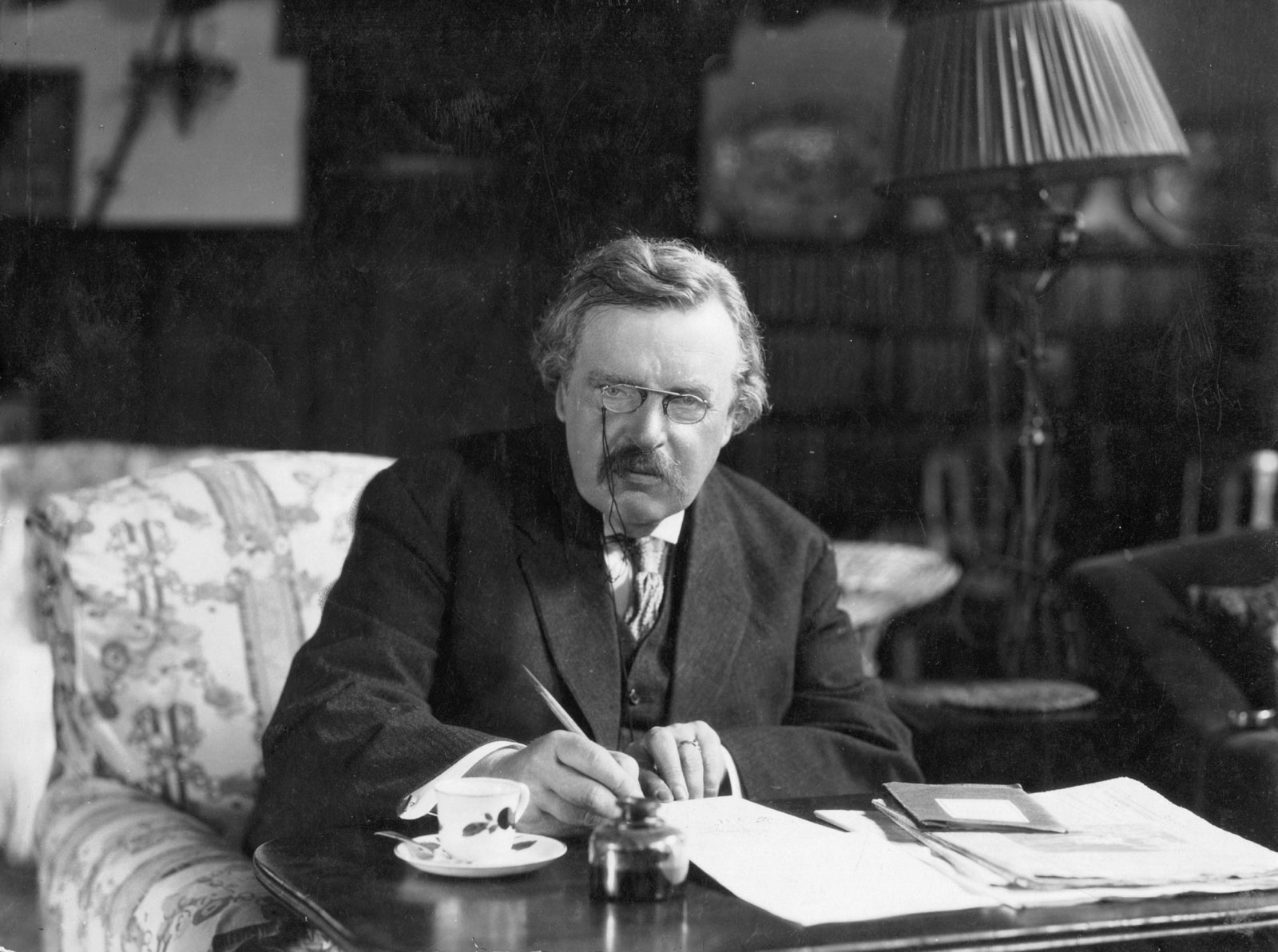
It is easy enough to make a plan of life of which the background is black, as the pessimists do; and then admit a speck or two of star-dust more or less accidental, or at least in the literal sense insignificant. And it is easy enough to make another plan on white paper, as the Christian Scientists do, and explain or explain away somehow such dots or smudges as may be difficult to deny. Lastly it is easiest of all perhaps, to say as the dualists do, that life is like a chess-board in which the two are equal, and can as truly be said to consist of white squares on a black board or of black squares on a white board. But every man feels in his heart that none of these three paper plans is like life; that none of these worlds is one in which he can live. Something tells him that the ultimate idea of a world is not bad or even neutral; staring at the sky or the grass or the truths of mathematics or even a new-laid egg, he has a vague feeling like the shadow of that saying of the great Christian philosopher, St. Thomas Aquinas, ‘Every existence, as such, is good.’ On the other hand, something else tells him that it is unmanly and debased and even diseased to minimise evil to a dot or even a blot. He realises that optimism is morbid. It is if possible even more morbid than pessimism. These vague but healthy feelings, if he followed them out, would result in the idea that evil is in some way an exception but an enormous exception; and ultimately that evil is an invasion or yet more truly a rebellion. He does not think that everything is right or that every thing is wrong, or that everything is equally right and wrong. But he does think that right has a right to be right and therefore a right to be there, and wrong has no right to be wrong and therefore no right to be there. It is the prince of the world; but it is also a usurper. So he will apprehend vaguely what the vision will give to him vividly; no less than all that strange story of treason in heaven and the great desertion by which evil damaged and tried to destroy a cosmos that it could not create. It is a very strange story and its proportions and its lines and colours are as arbitrary and absolute as the artistic composition of a picture. It is a vision which we do in fact symbolise in pictures by titanic limbs and passionate tints of plumage; all that abysmal vision of falling stars and the peacock panoplies of the night. But that strange story has one small advantage over the diagrams. It is like life.

GK Chesterton, The Everlasting Man

The Understanding Set Free

David Hume Ramsay

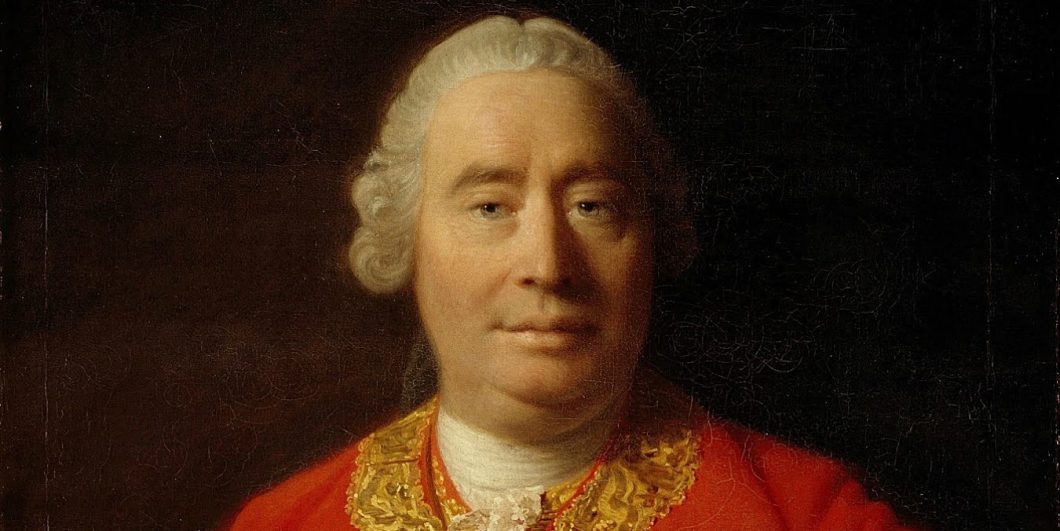
What I would say about the arguments that I have given is that, first, these arguments do lend rational support to Christian belief … and, secondly, I require God’s help to find them convincing—indeed, even to find them faintly plausible. Hume has said, “Mere reason is insufficient to convince us of its [the Christian religion’s] veracity: and whoever is moved by faith to assent to it is conscious of a continued miracle in his own person, which subverts all the principles of his understanding, and gives him a determination to believe what is most contrary to custom and experience.” The Christian who ignores Hume’s ironic intent and examines this statement seriously will find that it is very close to the truth in one way and very far from it in another. God’s subversive miracle is indeed required for Christian belief, but what this miracle subverts is not the understanding but the flesh, the old Adam, our continued acquiescence in our inborn tendency to worship at an altar on which we have set ourselves. (For this is what Hume, although he does not know it, really means by “custom and experience.”) And by this miracle the understanding is set free.

Peter van Inwagen, “Quam dilecta”

Which Is It, Then?

Becoming Mrs. Lewis' explores the turbulent life of the woman C. S. Lewis  called 'my whole world' - The San Diego Union-Tribune

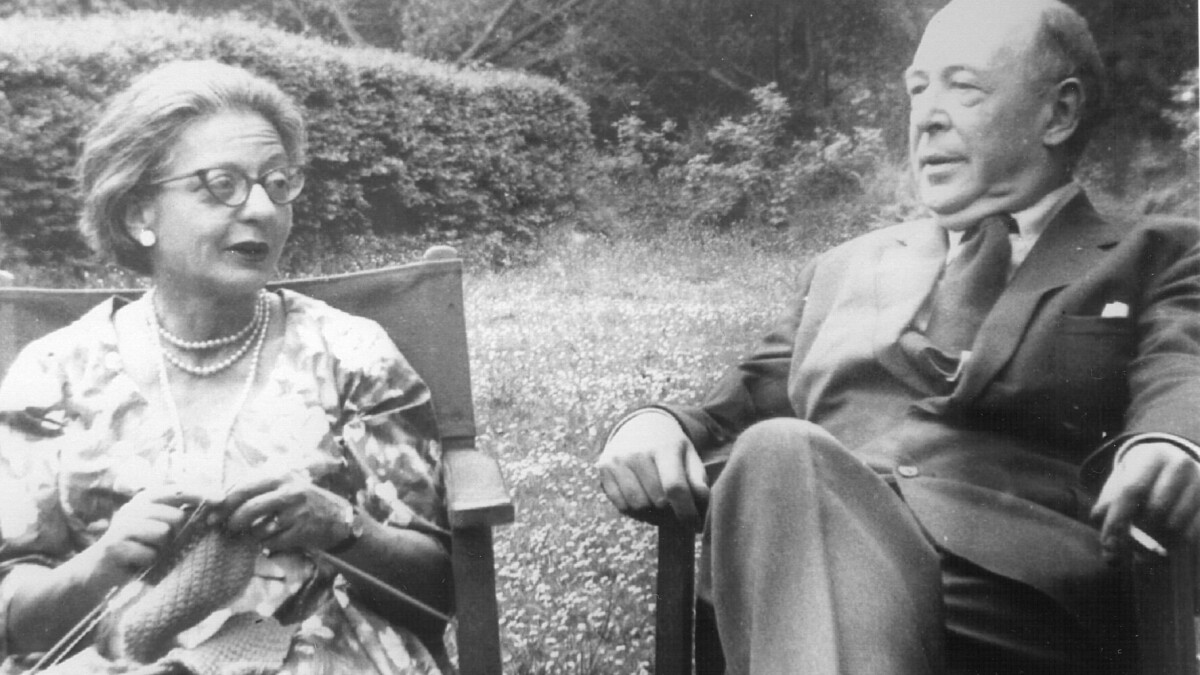
If God’s goodness is inconsistent with hurting us, then either God is not good or there is no God: for in the only life we know He hurts us beyond our worst fears and beyond all we can imagine. … But is it credible that such extremities of torture should be necessary for us? Well, take your choice. The tortures occur. If they are unnecessary, then there is no God or a bad one. If there is a good God, then these tortures are necessary. For no even moderately good Being could possibly inflict or permit them if they weren’t.
Either way, we’re for it.
What do people mean when they say ‘I am not afraid of God because I know He is good?’ Have they never even been to a dentist?

CS Lewis, A Grief Observed

Which is it, then?

“No God” must be ruled out. Our contingent, finite, spatiotemporally bound universe exists. Ex nihilo nihil fit: Our universe must therefore have a cause which is necessary, infinite, and unbound by space or time. Things are slightly more complicated than that—but not by much.

Which is it, then? A good God, or a bad one?

What reason have we, except our own desperate wishes, to believe that God is, by any standard we can conceive, ‘good’? Doesn’t all the prima facie evidence suggest exactly the opposite? What have we to set against it?

We set Christ against it. But how if He were mistaken? … The trap, so long and carefully prepared and so subtly baited, was at last sprung, on the cross. The vile practical joke had succeeded. … Is it rational to believe in a bad God? Anyway, in a God so bad as all that? The Cosmic Sadist, the spiteful imbecile?

I think it is, if nothing else, too anthropomorphic. When you come to think of it, it is far more anthropomorphic than picturing Him as a grave old king with a long beard. That image is a Jungian archetype. … It preserves mystery. Therefore room for hope. Therefore room for a dread or awe that needn’t be mere fear of mischief from a spiteful potentate. But the picture I was building up last night is simply the picture of a man like S.C.—who used to sit next to me at dinner and tell me what he’d been doing to the cats that afternoon. Now a being like S.C., however magnified, couldn’t invent or create or govern anything. He would set traps and try to bait them. But he’d never have thought of baits like love, or laughter, or daffodils, or a frosty sunset. He make a universe? He couldn’t make a joke, or a bow, or an apology, or a friend.

A bad God (or a bad man) could perhaps ape goodness and beauty to some degree. He could not create them out of nothing without examples of each to imitate (and eventually pervert). Have your pick of all the archvillains of history and fiction: Could any of them have composed not just your favorite poems but poetry itself? Could any of them have fashioned not just your favorite flowers but color and light and life themselves? Could Sauron, Hitler, Stalin, the Joker, or the Wicked Witch of the West not just have faked love but invented it?

But then every daffodil and peal of laughter and act of love is a singular proof of the existence of a good God.

Why, then, the tortures?

One answer is that faith only becomes serious when it becomes a latter of life and death—that only torture can awaken us from our madness:

Bridge-players tell me that there must be some money on the game ‘or else people won’t take it seriously’. Apparently it’s like that. Your bid—for God or no God, for a good God or the Cosmic Sadist, for eternal life or nonentity—will not be serious if nothing much is staked on it. And you will never discover how serious it was until the stakes are raised horribly high; until you find that you are playing not for counters or for sixpences but for every penny you have in the world. Nothing less will shake a man … out of his merely verbal thinking and his merely notional beliefs. He has to be knocked silly before he comes to his senses. Only torture will bring out the truth. Only under torture does he discover it himself.
And I must surely admit … that, if my house was a house of cards, the sooner it was knocked down the better. And only suffering could do it. But then the Cosmic Sadist and Eternal Vivisector becomes an unnecessary hypothesis. … God has not been trying an experiment on my faith or love in order to find out their quality. He knew it already. It was I who didn’t. … He always knew that my temple was a house of cards. His only way of making me realize the fact was to knock it down.

But another answer, in some respects the only answer, is that we simply do not know: do not know why Joy Davidman rather than CS Lewis, why the apostle James rather than his brother John, why this tragedy rather than another—or no tragedies at all.

And all the while the tortures continue apace. What, then?

Two widely different convictions press more and more on my mind. One is that the Eternal Vet is even more inexorable and the possible operations even more painful than our severest imaginings can forbode. But the other, that ‘all shall be well, and all shall be well, and all manner of thing shall be well’.

How Did They Get That Right?

Capernaum

What we find is an exact corollary between the top 9 most common male names in both the New Testament documents and other non-scriptural sources of that same time frame.

When researchers looked at the top 9 Jewish names of first century men living in Egypt they got a much different list of names that did not correspond at all to the list of names in Israel.

This means that it’s very unlikely that someone living in Egypt, for example, would have been able to guess at the right proportion and types of names to include in a story about Jewish men living in Jerusalem, even if they lived during the same time period. Much less likely that someone living outside of Jerusalem would have been able to accurately guess the types and proportions of Jewish names a half century later.

“It’s not just that they have the right proportion of names,” says Dr. Williams. “They also have the right features of names [e.g., especially common names like Simon and Mary are often qualified so that they can be disambiguated].” … We see a Gospel record that retains very specific details about seemingly minor characters and accurately communicates their names, decades after the facts and thousands of miles away. … The Gospel authors are also aware of the names of several cities and villages in the area, and they speak of them with amazing expertise. … “The Gospel authors … know that Capernaum is next to the sea. They know whether the land in those areas goes up or down, they know traveling times, etc. How did they get that right?” … [T]he Gospels of Philip and Peter and Thomas only mention Jerusalem and Nazareth whereas the Gospels mention a total of 23 towns and villages.… “… [T]hey’re getting it right on botany, on the shape of houses, on the description of the Temple, they’re getting the coinage right, they’re getting the social stratification right, they’re getting the religious setting right. After a while you think, there are so many opportunities for them to go wrong if they’re making it up. But they don’t seem to get it wrong.”

Lydia McGrew on Skeptics of the Resurrection

Image

The strength of the evidence can often be seen by looking at the lengths to which the skeptic must go to explain away that evidence rather than taking seriously the hypothesis that springs to mind. Hence, rather than take seriously the possibility of the resurrection, the skeptic must hypothesize that the women went to the wrong tomb and the persecutor Paul had some inexplicable fit on the road to Damascus that just happened to make him think Jesus was talking to him and that the Christians were right and the eleven disciples all just happened to have a coordinated mass hallucination of Jesus eating, being tangible, and talking to all of them at once, repeatedly, over a forty day period and James just happened to have a similar hallucination and…You get the picture.

Lydia McGrew, “There are no slippery prior probabilities”

More Fair than Dark Magic

narrow pathway near tress

Now we can see what the modern world is missing, aided by the admirable clarity of the blindsight of BLINDSIGHT. The Anarchist is rightfully devoted to destroying everything in the world, including himself, if in fact there were no truth, goodness, nor beauty in the world, or no way to achieve them. If we are all just programmed meat machines, suicide is the noblest option.

But if there is beauty, even it is ineffable, something never to be captured in words, a mystic feeling elusive as a ghost, then the Occultist is right to eschew all talk of truth and virtue, and right to tolerate any man’s approach to the inapproachable.

But if there is truth, even if it is hard and cold and tinged with bronze, the Cultist is right to impose it on the world, no matter the cost in human suffering, and let all competing truths and claims of other virtues be damned. The only beauty is what serves the Cause.

But if there is virtue, then men must get along with each other, and also go along with each other just enough to maintain the public weal. The talk of truth can be tolerated as long as no violence is done in its name, and beauty is in the eye of the beholder.

But if there is magic, then there is a force in the world which sets the standard of truth and beauty and goodness, and bright magic is both more fair than dark magic, and merits our loyalty. Each man must find that light for himself, because no authority is to be trusted.

But if there are miracles, and I mean miracles from God, then there is an authority, a divine and loving Father who has both the natural authority of a parent and of a creator and of king. If one of those miracles is the Resurrection, then to all these other claims of authority, the divine can also claim the most romantic authority of all: the authority earned by merit. Christ has authority because he earned it by suffering the quest to the bitter end, and rescuing the fair bride from the red dragon. The crown of thorns is his reward.

If there are miracles, there is at once truth and beauty and goodness, for all these flow from the same source.

John C. Wright, “Transhumanism and Subhumanism”

Lewis on the Realism of the Gospel of John

Antonio Ciseri, Ecce Homo

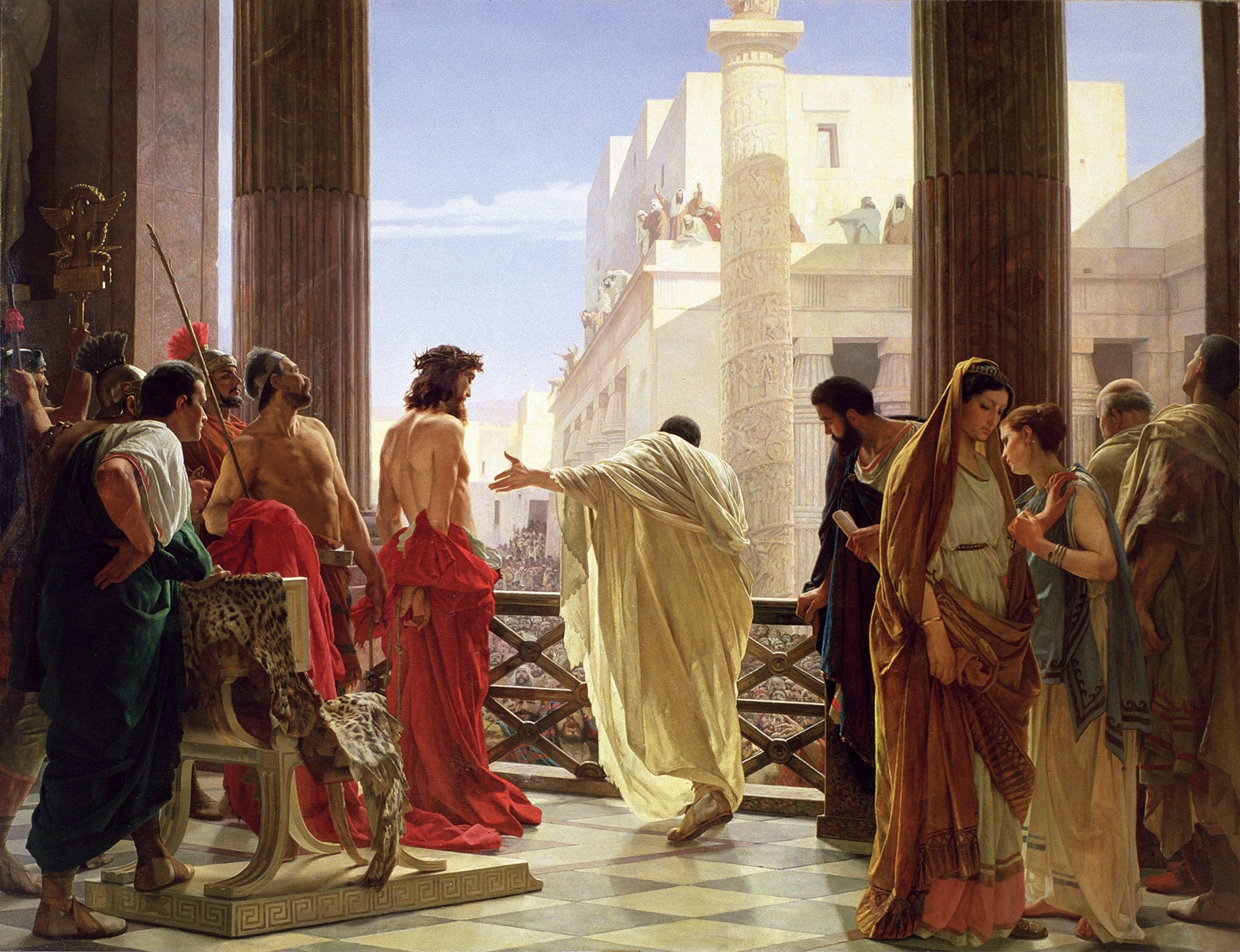
I have been reading poems, romances, vision-literature, legends, myths all my life. I know what they are like. I know that not one of them is like [the Gospel of John]. Of this text there are only two possible views. Either this is reportage … pretty close up to the facts; nearly as close as Boswell. Or else, some unknown writer in the second century, without known predecessors, or successors, suddenly anticipated the whole technique of modern, novelistic, realistic narrative. If it is untrue, it must be narrative of that kind. The reader who doesn’t see this has simply not learned to read.