Churches … include narrower and narrower bands of people. When I was a kid in a town of a few hundred, the town doctor, the farmers, the factory workers, and the grocer all came to my father’s church. They didn’t have much choice. It meant that the doctor knew when the widow’s kids were sick and didn’t worry much about her paying him. And when the doctor’s wife was sick, the widow sent dinner over. … Today people will drive miles to find a church made up of people like them. Churches have become collections of affinity groups, of people of the same class and interests, with few roles to assign other than passing the collection plate. How then can church give us a meaningful role, a sense of purpose, an ethic? How then do we reflect light out to the world?
John Alexander, Being Church: Reflections on How to Live as the People of God
Category: History
Could Anything Be Less Scientific

“We hold these truths to be self-evident, that all men are created equal, that they are endowed by their Creator with certain unalienable Rights …” Could it be honestly maintained that to submit, scrupulously and sincerely, to such ‘self-evident’ truths amounts to anything other than an act of religious re-confirmation or conversion? Or denied that, in these words, reason and evidence are explicitly set aside, to make room for principles of faith? Could anything be less scientific than such a declaration, or more indifferent to the criteria of genuinely universal reasoning? How could anybody who was not already a believer be expected to consent to such assumptions?
Nick Land
Thankfully, as Fitzhugh observes, “[a]ll the bombastic absurdity in our Declaration of Independence about the inalienable rights of man, had about as much to do with the [Revolution of ’76] as would a sermon or oration on the teething of a child or the kittening of a cat.”
Happy Fourth!
A False Theory to Defend

When we peruse the analysis [David Friedrich Strauss] gives of the different Gospel narratives, we cannot but wonder at the exceeding patience and ingenuity which must have presided over their formation. Let us take, by way of illustration, the first that occurs in his book—the annunciation and birth of the Baptist. According to Strauss, this was got up in the following way. An individual had in his mind a compound image blended from scattered traits respecting the late birth of distinguished individuals as recorded in the Old Testament. He thought of Isaac, whose parents were advanced in their days when they were promised a son, and this suggested that John’s parents should be the same. He remembered how doubtingly Abraham asked, when God promised him a seed which should inherit Canaan, “How shall I know that I shall inherit it?” and hence he made Z[a]charias ask, “Whereby shall I know this?”—he called to mind that the name of Aaron’s wife was, according to the LXX., Elizabeth, and this suggested a name for John’s mother. Then he bethought him of Samson’s birth being announced by an angel, and accordingly he provided an angel to announce that of John also—he glanced at popular Jewish notions regarding angels visiting the priests in the temple, and thence obtained a locality for the angelic apparition to Zacharias—he got back next to Samson, and from his history supplied the instructions which the angel gives respecting John’s Nazaritic education, as well as the blessings which it was predicted that John’s birth would confer upon his country—he next went to the history of Samuel, and borrowed thence the idea of the lyric effusion uttered by Zacharias on the occasion of his son’s circumcision—he then fixed upon a significant name for the prophet, calling him John, after the precedent of Israel and Isaac—the command to Isaiah to write the name of his son, Mahershalal-hash-baz, upon a tablet, recalled to him the necessity of providing Zacharias also with something of the same sort; and as for the dumbness of the priest, it was suggested by the fact that the Hebrews believed that when any man saw a divine vision, he usually lost for a time one of his senses. “So,” exclaims Dr. Strauss, after a long enumeration of all these particulars, “we stand here upon purely mythical-poetical ground!” Indeed! then must the people of that mythical-poetical age have been deeply versed in all those artifices of composition, by which in these later times men of defective powers of fancy continue to construct stories by picking and stealing odds and ends of adventure from those who have written before them. No hero of the scissors-and-paste school ever went more unscrupulously to work than did this unknown composer of the story of John’s birth. And, after all, he made it look so natural and so apparently, original, that it required a German philosopher of the nineteenth century to find out for the first time, that it was a mere piece of Mosaic from bits of the antique—a “mere thing of shreds and patches!” I blush for the degeneracy of the age. The most practised of booksellers’ hacks now-a-days is far, very far behind this skillful literary man of a mythical-poetical age.
Such are some of the logical inconsistencies into which Dr. Strauss is betrayed by his theory. I adduce them not as against him, but as against it. They are not the slips of a careless or inconsistent reasoner; they are the errors into which a man of much acuteness and dexterity has been led by having a false theory to defend.
William Lindsay Alexander, Christ and Christianity: A Vindication of the Divine Authority of the Christian Religion, Grounded on the Historical Verity of the Life of Christ
Hazony on Progressive Imperialism
Blindness to the existence of competing nations, each with unique laws and traditions that are its own, has likewise found expression in the aspiration to establish a “liberal world order.” In their campaign to establish a universal political community, liberals have assumed that the various rights and liberties associated with the traditional Anglo-American constitution, developed and inculcated over centuries, are in fact dictates of universal human reason and will be recognized as desirable by all human beings. Since the 1990s, this belief has led to American military intervention, with European assistance, in countries such as Bosnia, Serbia, Somalia, Iraq, Afghanistan, Libya, and Syria. These operations have sometimes involved protracted military occupations, whose aim has been to impose liberal democracy upon peoples that have no such traditions. At other times, they have involved aerial bombardment aimed at destroying an existing political regime, on the assumption that this would bring the people to rise up and establish a liberal-democratic regime in its place. In all these cases, intervention was shaped by the belief that because liberalism is a dictate of universal human reason, foreign peoples would shrug off their own national and tribal traditions to embrace reason and a liberal form of government. These policies have had an almost unblemished record of failure. In no case have the intensive military operations of recent decades led to the establishment of something resembling liberal democracy—this despite the deaths of perhaps a million foreign nationals, the loss of thousands of American and European lives, and the expenditure of trillions of dollars on these futile foreign adventures. Indeed, far from understanding Enlightenment liberalism as a universal truth, these peoples have tended to retain their national and tribal loyalties and to regard liberalism as the false inheritance of a foreign nation. The more Americans and Europeans seek to instill these ideas in the nations they have conquered, the more certain these peoples become that the ideas in question are nothing more than tools for the extension of American empire and the subjugation of foreigners. Meanwhile, liberals say that such failures are due to “poor implementation,” and continue viewing liberal democracy as a universal truth, which is therefore impervious to alteration in the face of experience.
Yoram Hazony, Conservatism: A Rediscovery
They Love All Men

For the Christians are distinguished from other men neither by country, nor language, nor the customs which they observe. For they neither inhabit cities of their own, nor employ a peculiar form of speech, nor lead a life which is marked out by any singularity. … But, inhabiting Greek as well as barbarian cities, according as the lot of each of them has determined, and following the customs of the natives in respect to clothing, food, and the rest of their ordinary conduct, they display to us their wonderful and confessedly striking method of life. They dwell in their own countries, but simply as sojourners. As citizens, they share in all things with others, and yet endure all things as if foreigners. Every foreign land is to them as their native country, and every land of their birth as a land of strangers. They marry, as do all [others]; they beget children; but they do not destroy their offspring. They have a common table, but not a common bed. They are in the flesh, but they do not live after the flesh. They pass their days on earth, but they are citizens of heaven. They obey the prescribed laws, and at the same time surpass the laws by their lives. They love all men, and are persecuted by all. They are unknown and condemned; they are put to death, and restored to life. They are poor, yet make many rich; they are in lack of all things, and yet abound in all; they are dishonoured, and yet in their very dishonour are glorified. They are evil spoken of, and yet are justified; they are reviled, and bless; they are insulted, and repay the insult with honour; they do good, yet are punished as evil-doers. When punished, they rejoice as if quickened into life; they are assailed by the Jews as foreigners, and are persecuted by the Greeks; yet those who hate them are unable to assign any reason for their hatred.
The Epistle of Diognetus
All This Was Proclaimed Progress
The advocates of so-called ‘social progress’ believe they are introducing humanity to some kind of a new and better consciousness. Godspeed, hoist the flags, as we say, go right ahead. The only thing that I want to say now is that their prescriptions are not new at all. It may come as a surprise to some people, but Russia has been there already. After the 1917 revolution, the Bolsheviks, relying on the dogmas of Marx and Engels, also said that they would change existing ways and customs, and not just political and economic ones, but the very notion of human morality and the foundations of a healthy society. The destruction of age-old values, religion, and relations between people, up to and including the total rejection of family (we had that, too), encouragement to inform on loved ones—all this was proclaimed progress and, by the way, was widely supported around the world back then and was quite fashionable, same as today. By the way, the Bolsheviks were absolutely intolerant of opinions other than theirs.
This, I believe, should call to mind some of what we are witnessing now. … The fight for equality and against discrimination has turned into aggressive dogmatism bordering on absurdity, when the works of the great authors of the past—such as Shakespeare—are no longer taught at schools or universities, because their ideas are believed to be backward. The classics are declared backward and ignorant of the importance of gender or race. In Hollywood, memos are distributed about proper storytelling and how many characters of what color or gender should be in a movie. This is even worse than the agitprop department of the Central Committee of the Communist Party of the Soviet Union.
Peterson:
[A]ll of you going along with the DIE activists, whatever your reasons: this is on you. Professors. Cowering cravenly in pretence and silence. Teaching your students to dissimulate and lie. To get along. As the walls crumble. For shame. CEOs: signalling a virtue you don’t possess and shouldn’t want to please a minority who literally live their lives by displeasure. … At the moment, I can’t tell if you’re more reprehensibly timid even than the professors. … Musicians, artists, writers: stop bending your sacred and meritorious art to the demands of the propagandists before you fatally betray the spirit of your own intuition. Stop censoring your thought. Stop saying you will hire for your orchestral and theatrical productions for any reason other than talent and excellence. That’s all you have. That’s all any of us have.
White Flight’s Success

Jews displaced by street crime in New York City were many Holocaust survivors and refugees. One Canarsie grandmother made a comparison that rattled the sociologist who heard it: “I am locked up like in the ghettos of Europe. I am afraid of people knocking down my door. I still am not free.”
How could this calamity be memory holed so thoroughly that, to the extent anyone remembers it today, we talk as if the Holocaust survivors were the villains of the story? It is because the boomers themselves were too young to remember it. Most people born in the decade after 1945 would have been in their twenties when Judge Garrity’s busing decision came down, too old to be in school and too young to have children of their own.
Preserving the boomers’ liberalism on race was, in many cases, precisely why their parents had fled to the suburbs. Bernie and Roz Ebstein of Chicago had marched with Martin Luther King and were committed to staying in Merrionette Manor even as the neighborhood flipped, until their school-age sons started expressing racial resentments. “You believe this stuff about integration,” their eldest told them, “but we’re living it.” The Ebsteins quickly moved to Hyde Park, where little David and Steven would no longer have their liberal opinions beaten out of them. Having high-status views on race was part of the middle-class life they wanted to pass on to their children, no less than material comforts and a college education.
It is therefore a mark of white flight’s success that so many boomers are willing to believe Ta-Nehisi Coates’s lies about it.
Helen Andrews, Boomers: The Men and Women Who Promised Freedom and Delivered Disaster
They Called It Progress

In absolute terms—and probably per capita as well—the twentieth century visited more collective violence on the world than any century of the previous ten thousand years. … [E]arlier wars deployed nothing like the death-dealing armaments, much less the state-backed extermination of civilians, that twentieth-century conflicts brought with them…. [T]he world death rate for large-scale war ran around 90 per million population per year during the eighteenth century, 150 per million during the nineteenth century, and over 400 per million during the twentieth…. Altogether, about 100 million people died as a direct result of action by organized military units backed by one government or another over the course of the twentieth century. Most likely a comparable number of civilians died of war-induced disease and other indirect effects…. Large postwar waves of genocide and politicide occurred before 1980 in the Soviet Union (1943–1947), China (1950–1951), Indonesia (1965–1966), again China (1966–1975), Pakistan (1971), Uganda (1971–1979), and Cambodia (1975– 1979). During the 1980s they continued on substantial scales in Afghanistan, Uganda, El Salvador, Iran, Syria, Sri Lanka, Ethiopia, and probably Iraq…. Since 1945, then, the world as a whole has taken decisive, frightening steps away from its painfully achieved segregations between armies and civilian populations, between war and peace, between international and civil war, between lethal and nonlethal applications of force. It has moved toward armed struggle within existing states and toward state-sponsored killing, deprivation, or expulsion of whole population categories. These trends greatly exceed population growth and the multiplication of independent states; they constitute an enormous increase per capita and per state. … Except occasionally to wring their hands at other people’s barbarity, residents of rich Western countries have not much noticed.
Charles Tilly, The Politics of Collective Violence
Bethsaida and Saybrook
Sometime between from the first century B.C.E. to the early first century, a fishing village [Bethsaida] arose where the Jordan River enters the shore of the Sea of Galilee. … In the year 30 or 31 C.E., tetrarch Herod Philip upgraded the village to a polis named Julias, according to the Roman-Jewish historian Josephus Flavius. Then, in the third century, the historical record goes silent on Bethsaida-Julias until the fifth century.
Ruth Schuster, “Has the ‘Lost City’ of the Gospels Finally Been Found?”
Bethsaida—a small fishing village renamed around the time of Jesus’ death—is mentioned in all four Gospels.
Many biblical scholars think that the Gospels were written not by their traditionally attributed authors (Matthew, Mark, Luke, and John) but by other anonymous Christians in the late first or even early second century—several decades or more after Jesus’ death, and several decades or more after Bethsaida was renamed. Furthermore, many biblical scholars think that some or all of the Gospels were written not in Israel but in other faraway places like Ephesus or Antioch.
But now imagine that you are living in California and writing a book set long ago and far away in 1940s New England in which you mention the small town of Saybrook, Connecticut. As it so happens, there was a Saybrook in Connecticut in the 1940s. But Saybrook was renamed Deep River in 1947. How then can you—writing seventy-plus years later in California in 2021—have found out about the small town formerly known as Saybrook?
I found out about it because I Googled a list of renamed towns in the United States for this post. But suppose I could not Google such a list. Suppose we lived in a society in which there were no Google, no Internet, no computers, and few written records of any kind—and few people who could even read them to begin with. In such a society, it would be all but impossible for us to find out about Saybrook—unless, of course, we knew someone from Saybrook (or were ourselves from there).
In a world without computers, the Internet, and other modern sources of information, finding out about Saybrook in California in 2021 would be all but impossible unless one had some personal connection to the town. With such a personal connection, however, finding out about Saybrook would be trivially easy even in a pre-modern world with no computers, no Internet, and so on.
In a world without computers, the Internet, and other modern sources of information, finding out about Bethsaida in Ephesus or Antioch in the late first or early second century would be all but impossible unless one had some personal connection to the town. With such a personal connection, however, finding out about Bethsaida would be trivially easy even in a pre-modern world with no computers or Internet.
In other words: The (spatiotemporally and personally) closer the authors of the Gospels were to Jesus and the apostles, the easier it becomes to explain their knowledge of Bethsaida.
But Bethsaida is just one of countless examples of the Gospel authors’ intimate geographical, political, and other knowledge of early first-century Jerusalem, Judea, and Galilee.
Which raises the question: How did they get that right?

What Christianity Offered
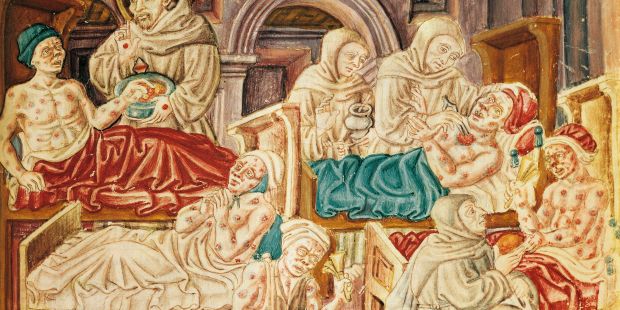
To cities filled with the homeless and impoverished, Christianity offered charity as well as hope. To cities filled with newcomers and strangers, Christianity offered an immediate basis for attachments. To cities filled with orphans and widows, Christianity provided a new and expanded sense of family. To cities torn by violent ethnic strife, Christianity offered a new basis of solidarity. And to cities faced with epidemics, fires, and earthquakes, Christianity offered effective nursing services.
Rodney Stark, The Rise of Christianity: How the Obscure, Marginal Jesus Movement Became the Dominant Religious Force in the Western World in a Few Centuries